Thursday, 20 November 2014

Interviews and Questionnaires

INTERVIEWS AND QUESTIONNAIRES FOR MY DESIGN

In my Year II of architecture, we were asked to do a rural project. This project involved students in groups travelling to rural areas within the state, studying their respective settlements and design anything which was missing and could be of help to the people there.

It was truly a different experience, being out of our comfort zone, language barrier and location barrier. We asked many questions and interviewed the villagers in order to develop a design for them.


Some of the questions asked to the villagers:

1. Is there anything required in your village?
2. How do the children go to school?
3. Is there a market here?
4. How do you get water supplied?
5. Do you have electricity?
6. Is there a place of worship for you?


The questions helped to decide what to design for our project. We designed a school building within the village since the children had to walk a few miles to go to the nearest school. Due to time constraint, location and resources available, a detailed research could not be done


Wednesday, 12 November 2014

Project I - Origami Study Lamp (Design)

All the research and study helped me summarise what I wanted in my design......


INITIAL SKETCHES


I made origami models to decide which form is the most ideal for the design. The light had to be contained in order to produce the most directed light for the study task. For this purpose the origami had to be closed.


Finally I came up with a form that was easily makeable and closed at the same time. My deesign involved designing a light with a personal touch to it.
The lamp evolved as a functional product that connected to me personally in the form of providing confidence and reassurance to me in my times of struggle by reminding me of my mom who was my guiding light since my youth!


My main material was metal due to the fact that it could be bent and still be stable. Metal also allowed me to create an embellishment on its surface which could be reflected on it thereby creating a pattern on the light. 

FINAL SHEETS


Sunday, 9 November 2014

Project I- Origami Study Lamp (Research)

ORIGAMI STUDY LAMP

The aim of this project was to design a product that characterized me!


I love Origami and lighting, so I thought -why not? Make a design that could incorporate  both at the same time.
I wanted to design a light that is compact, portable, and sustainable.


A design that allows me to study and work in any environment .

Step 1, was to  conduct studies on origami to design a suitable form for the light that could be made simple without any complicated folds, in order to complete the making of the light quickly. 

What is Origami? the  art of paper folding, which is often associated with Japanese culture-to transform a flat sheet of paper into a finished sculpture through folding and sculpting techniques.
(SOURCE: http://www.unesco.org/culture/ich/en/RL/00219)

Types Of Origami :

ACTION ORIGAMI


SOURCE:
 http://craftaastic.blogspot.co.uk/2012/07/paper-craft-origami.html

technique which involves object moving.The simplest method of origami. Easy and Fast.

MODULAR ORIGAMI

SOURCE: http://alhydgaggdis.blog.com/2014/11/12/modular-origami/
several modules of same origami object used to create a larger object. No scope for flexibility in this type of method. Creates a repetition pattern.

WET-FOLDING ORIGAMI

SOURCE: http://www.giladorigami.com/Articles_Wetfolding.html
used for creating objects with curved edges rather than sharp angles and geometric shapes. Requires water and dampness for it to work.


TESSELATIONS ORIGAMI

SOURCE: http://www.pleatfarm.com/2009/11/08/paper-foldings-by-andrea-russo/
A combination of pleats and folds to create an object along a plane.Seems more linear.Complicated and time consuming.

CASE STUDIES

NAME : Lumio
DESIGNER : Max Gunawan
SOURCE : http://www.designboom.com/design/pop-up-paper-book-lamp-lumio-sf-by-max-gunawan-now-in-production/

SOURCE: http://www.en.ozartsetc.com/2013/02/20/lumio-by-max-gunawan/
    
 A lamp that can be carried anywhere, used for multiple purposes and is considered eco-friendly.


NAME : Folded Origami Table Lamp
DESIGNER : Mirco Kirsch
SOURCE : http://www.designboom.com/design/folded-origami-table-lamp/


A light that is pre-maufactured to fold based on origami into a design that is fixed. Similar to origami, a flat metal sheet is used as the base, along which edges are inscribed to fold along.The metal helps the light for stability and the entire process can be completed in few minutes . A fun way for origami lovers!


folded origami table lamp by mirco kirsch for belt + sund


Origami Folded Metal Table Lamp by Mirco Kirsch


NAME : Paper LED Torch Light
DESIGNER : Kazuhiro Yamanaka
SOURCE :  http://www.designboom.com/design/paper-led-torch-light-by-kazuhiro-yamanaka/
paper LED torch light by kazuhiro yamanaka

One of the most neatest and simplest designs I've seen that works so well. I guess true to what Mies Van Der Rohe said "Less Is More".


A small Diode that looks almost negligible is used for the illumination. Based on a mechanism , the light gets turned on and off when you roll and unroll the paper.


Friday, 7 November 2014

Research II - Secondary

SECONDARY RESEARCH

SOURCE: http://cnfolio.com/SustainableTechnologyTopic02Print

All basic information that is written by other sources and collected is called secondary research.


 SOURCE:  http://www.mymarketresearchmethods.com/primary-secondary-market-research-difference

PROJECT II - ART GALLERY

I used secondary research to conduct my investigation on art galleries.

NAME : Guggeinheim Museum
ARCHITECT : F.L. Wright

SOURCE :http://en.wikipedia.org/wiki/Solomon_R._Guggenheim_Museum
 Frank L. Wright’s Museum,was built in 1943 and known for its organic form and organisation of space.
Stacked white cylinder of reinfored concrete with a central atrium with a glass dome - proposed “one great space on a continuous floor,”
 Along the sides of this atrium is a continuous ramp uncoiling upwards six stories for more than one-quarter of a mile, allowing for one floor to flow into another – a processional circulation of viewing art as you go up!

SOURCE: http://imgkid.com/frank-lloyd-wright-guggenheim-plan.shtml

SOURCE: http://www.interestingamerica.com/2011-04-14_Guggenheim_Museum_NY_by_Grigonis_42.html
What i really liked about this gallery is the constant interaction between the various floor at all times. Unlike the usual museum spaces with their closed rooms and boxes, this gallery connects all the spaces together into a big coil with ever changing perspectives of the art.

NAME : Kunsthaus Graz
ARCHITECT : Peter Cook


SOURCE :http://openbuildings.com/buildings/kunsthaus-graz-profile-38574


Located in Austria, this is an example of blob architecture and execution of a long standing concept by Archigram leader Peter Cook. The building’s gallery spaces act as “a black box of hidden tricks to be left in the hands of various curators.”- freed from obligation to fit its form to any particular function.

Known for the current trend of responsive architecture,this building or blob as they call it, paves the way for many more in the future, as technology progresses.


The BIX screen is so fascinating with its interactive acrylic glass panels. An unusual in the period of the usual!


Thursday, 6 November 2014

Primary Research - Qualitative And Quantitative

There a two types of research prevalent- primary and secondary.


SOURCE: https://ruthlessresearch.files.wordpress.com/2011/09/map-of-research.jpg

Primary research involves first perspective study consisting of qualitative and quantitative study.


QUALITATIVE RESEARCH 

Project 1 example - Study Lamp

Ask questions to light shop employees on what type of study light is most popular in market...
Do group discussions with students and other category of people who use study lamps on what type of lamps are the most convenient and what material is long lasting....

QUANTITATIVE RESEARCH 

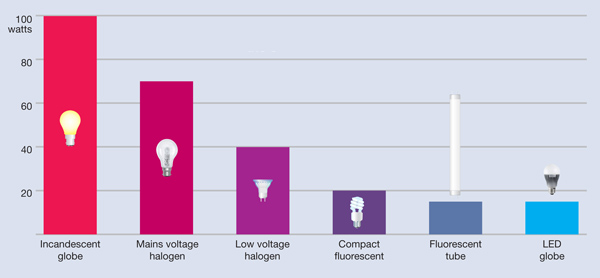
A statistical survey on what type of bulb is best suitable for the light.

SOURCE:https://www.sa.gov.au/topics/water-energy-and-environment/energy/saving-energy-at-home/household-appliances-and-other-energy-users/lighting


Primary research methods help to get a more personal reflection of the topic. It takes into consideration, real life situations, which are contextual to the problem. But one disadvantage , that I feel is that it may vary too much in terms of concluding and is too time consuming. 


The Many Faces Of ORIGAMI

My first project in uni, involves me using origami as the base to create a product. Origami is so much fun to do when you're bored and looking for something to do at home, which does not require you to hunt for things needed!!


ELEPHANT SEATING - BEN RYUKI MIYAGI


SOURCE : http://www.pleatfarm.com/wp-content/uploads/2010/01/Elephant-seating-01.jpg

An interesting concept of Origami used to make a sofa which gives the illusion of an elephant. Material of felt sheets are used thereby retaining the use of paper as usual in origami.


T SHELF - JAEWON CHO


FIGURED TEA BAG - NATALIA PONOMAREVA


SOURCE:http://www.innerdesign.com/uploads/tiny/dfcc573f501526ad46de0d111b633483.jpg

How cool is it that this tea bag when placed in the tea, opens up into a paper crane?!

ORIGAMI TABLE LAMP - MIRCO KIRSCH


REF: http://www.designboom.com/design/folded-origami-table-lamp/


From a single metal sheet, this table light is folded into shape within five minutes.


OUTDOOR FURNITURE - JOEL ESCALONA AND GRUPO HEWI

Simple clean lines folded to create a functional object. The material looks vernacular and sustainable.
1_set1
REF: http://traechic.typepad.com/.a/6a01156e4988a4970c01347fe034a3970c-pi

Who knew that origami has so many sides to it now? Anything can be made with it..and it is ecofriendly as a material. Even though it is not very long lasting, the advantages of using paper forms outweighs the disadvantages.