Categories

Showing posts with label Research Process. Show all posts

Thursday, 20 November 2014

Ethnographic Research

MEANING

Ethnographic research is the method of studying a settlement or social group, by direct observation or through questions and interviews. It involves analyzing the beliefs, traditions, culture and other social customs related to them.

 "Ethnography consists of the observation and analysis of human groups considered as individual entities (the groups are often selected, for practical and theoretical reasons unrelated to the nature of the research involved, from those societies that differ most from our own). Ethnography thus aims at recording as accurately as possible the perspective modes of life of various groups." -  Structural Anthropology (1963), by Claude Lévi-Strauss.

TECHNIQUES

SOURCE : http://archives.rockpaperink.com/content/article.php?id=1039

AN EXAMPLE FOR ETHNOGRAPHIC RESEARCH UNDERTAKEN

In my final year of under graduation, we were given a project to study the urban fabric of our city(Chennai,South India). An area of the city was given to us, which was the very chaotic Central Railway Station Junction, and we were asked to propose a design solution for the given project problem.

The area was the most congested part of the city with poor pedestrian crossing ,as a result traffic jams occurred on the main roads, hawkers selling stuff on the roads, almost empty , isolated underpasses and overpasses due to their unreasonable locations, taxi and auto stands on the road center and lack of proper resting areas and pavements. Another important fact was that, the stretch contained several historical buildings that were under conservation.

Problem - Designing a circulation solution to reduce the congestion and chaos of the area.


Site Photos : 

                                                                                SOURCE : me


Videos taken on the site recorded the circualtion pattern of the various areas


We mapped out the different circulation paths and hotspots .


this shows the density of people in the various areas


the important buildings on the site


pedestrian and vehicular movement


Segregating the different problems in layers helped in studying each individually.The problem with the area, is the coincidence and interlocking of the various layers into one frame,therefore creating tension on the main level.


As a result of this study, we were able to record and document the nature of the circulation and the source of the current situation of chaos. This helped us in coming up with a solution that would leave a mark on the city due to its prominent location and importance of the landmark. Undergoing this sense of intimate and detail research,  was able to indentify the main problem and therby, the final answer to something that would leave an impact on the people. 


Interviews and Questionnaires

INTERVIEWS AND QUESTIONNAIRES FOR MY DESIGN

In my Year II of architecture, we were asked to do a rural project. This project involved students in groups travelling to rural areas within the state, studying their respective settlements and design anything which was missing and could be of help to the people there.

It was truly a different experience, being out of our comfort zone, language barrier and location barrier. We asked many questions and interviewed the villagers in order to develop a design for them.


Some of the questions asked to the villagers:

1. Is there anything required in your village?
2. How do the children go to school?
3. Is there a market here?
4. How do you get water supplied?
5. Do you have electricity?
6. Is there a place of worship for you?


The questions helped to decide what to design for our project. We designed a school building within the village since the children had to walk a few miles to go to the nearest school. Due to time constraint, location and resources available, a detailed research could not be done


Friday, 7 November 2014

Research II - Secondary

SECONDARY RESEARCH

SOURCE: http://cnfolio.com/SustainableTechnologyTopic02Print

All basic information that is written by other sources and collected is called secondary research.


 SOURCE:  http://www.mymarketresearchmethods.com/primary-secondary-market-research-difference

PROJECT II - ART GALLERY

I used secondary research to conduct my investigation on art galleries.

NAME : Guggeinheim Museum
ARCHITECT : F.L. Wright

SOURCE :http://en.wikipedia.org/wiki/Solomon_R._Guggenheim_Museum
 Frank L. Wright’s Museum,was built in 1943 and known for its organic form and organisation of space.
Stacked white cylinder of reinfored concrete with a central atrium with a glass dome - proposed “one great space on a continuous floor,”
 Along the sides of this atrium is a continuous ramp uncoiling upwards six stories for more than one-quarter of a mile, allowing for one floor to flow into another – a processional circulation of viewing art as you go up!

SOURCE: http://imgkid.com/frank-lloyd-wright-guggenheim-plan.shtml

SOURCE: http://www.interestingamerica.com/2011-04-14_Guggenheim_Museum_NY_by_Grigonis_42.html
What i really liked about this gallery is the constant interaction between the various floor at all times. Unlike the usual museum spaces with their closed rooms and boxes, this gallery connects all the spaces together into a big coil with ever changing perspectives of the art.

NAME : Kunsthaus Graz
ARCHITECT : Peter Cook


SOURCE :http://openbuildings.com/buildings/kunsthaus-graz-profile-38574


Located in Austria, this is an example of blob architecture and execution of a long standing concept by Archigram leader Peter Cook. The building’s gallery spaces act as “a black box of hidden tricks to be left in the hands of various curators.”- freed from obligation to fit its form to any particular function.

Known for the current trend of responsive architecture,this building or blob as they call it, paves the way for many more in the future, as technology progresses.


The BIX screen is so fascinating with its interactive acrylic glass panels. An unusual in the period of the usual!


Thursday, 6 November 2014

Primary Research - Qualitative And Quantitative

There a two types of research prevalent- primary and secondary.


SOURCE: https://ruthlessresearch.files.wordpress.com/2011/09/map-of-research.jpg

Primary research involves first perspective study consisting of qualitative and quantitative study.


QUALITATIVE RESEARCH 

Project 1 example - Study Lamp

Ask questions to light shop employees on what type of study light is most popular in market...
Do group discussions with students and other category of people who use study lamps on what type of lamps are the most convenient and what material is long lasting....

QUANTITATIVE RESEARCH 

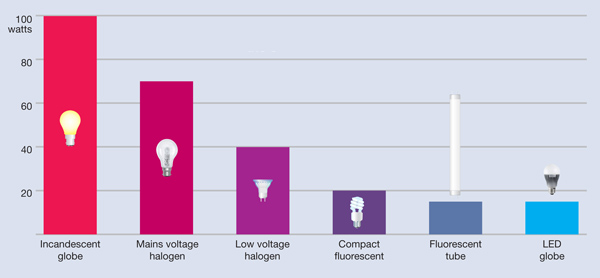
A statistical survey on what type of bulb is best suitable for the light.

SOURCE:https://www.sa.gov.au/topics/water-energy-and-environment/energy/saving-energy-at-home/household-appliances-and-other-energy-users/lighting


Primary research methods help to get a more personal reflection of the topic. It takes into consideration, real life situations, which are contextual to the problem. But one disadvantage , that I feel is that it may vary too much in terms of concluding and is too time consuming.